

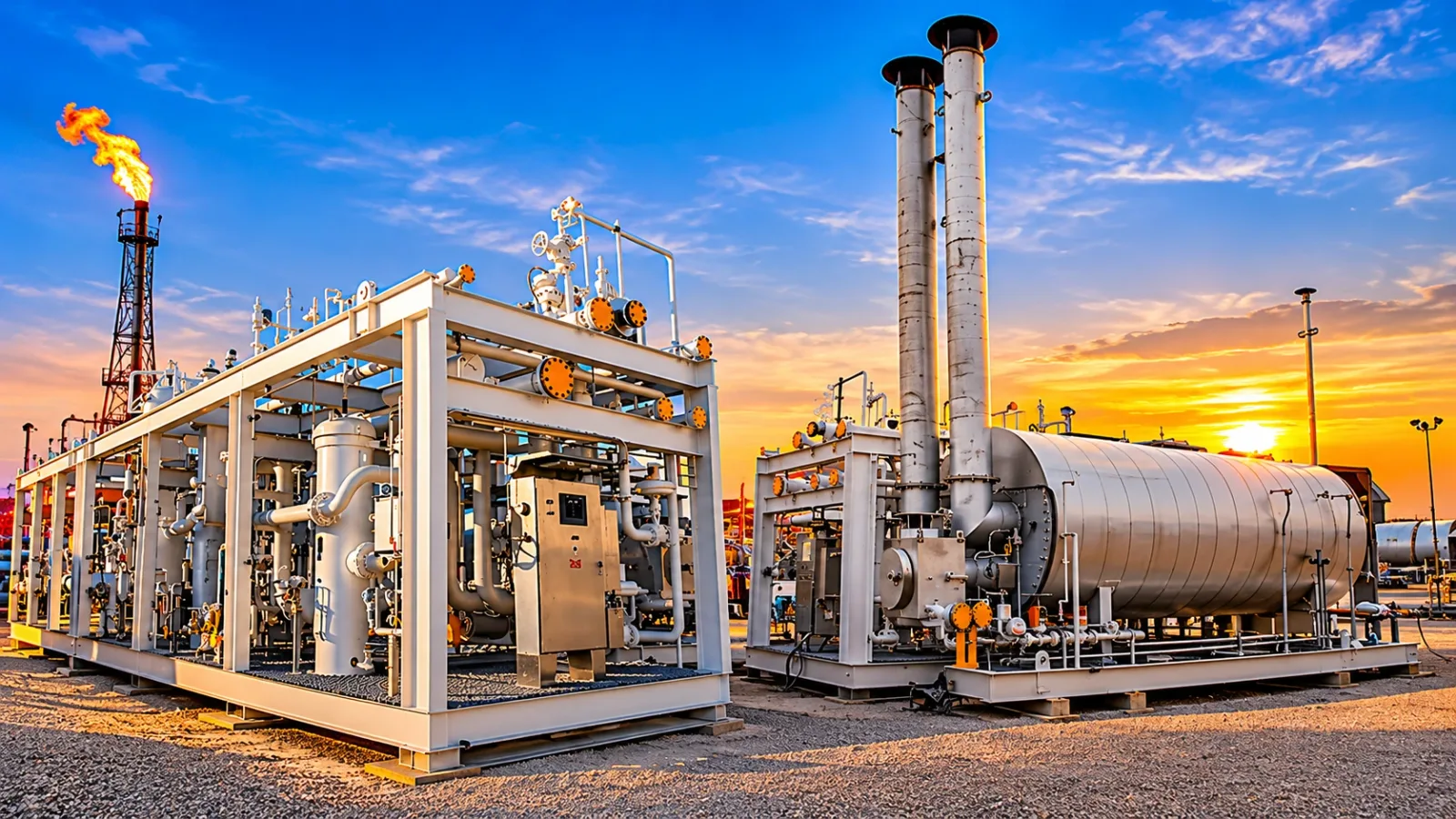
The oil and gas industry requires reliable processing equipment that can be installed efficiently and adapted to changing production requirements. Traditional on-site construction can involve complex installation work, longer project schedules, and additional coordination.
Modular production systems offer a practical alternative. These systems combine multiple process equipment components into pre-engineered, skid-mounted units that are fabricated and tested before delivery.
For oil and gas operators, modular systems can simplify project execution, improve installation efficiency, and provide flexibility for future expansion.
Modular production systems are integrated process units designed to perform specific oil and gas production or treatment operations.
They can consist of one or multiple skids connected together at the project site to create a complete processing facility.
Depending on project requirements, a modular system may include:
These components are assembled into a compact package to simplify transportation, installation, and operation.
Modular production systems are engineered and fabricated off-site before being transported to the operating facility.
The typical process includes:
Engineering and Design: Equipment is designed according to process requirements, operating conditions, and project specifications.
Fabrication: Individual components are assembled into skid-mounted modules in a controlled manufacturing environment.
Testing: Equipment and systems undergo inspections and Factory Acceptance Testing (FAT) before shipment.
Transportation: Completed modules are delivered to the project location.
Installation and Commissioning: Modules are connected, checked, and prepared for operation.
This approach allows much of the construction work to be completed before equipment reaches the site.
Modular systems offer several advantages over conventional on-site construction.
1. Faster Project Installation
Since equipment is fabricated before delivery, less assembly work is required at the project site. This can help simplify installation and project execution.
2. Improved Quality Control
Off-site fabrication provides a controlled environment for equipment assembly, inspection, and testing before shipment.
3. Flexible Design
Modular facilities can be designed around specific production requirements. Additional modules can also be incorporated when operational needs change.
4. Reduced On-Site Construction Work
Preassembled equipment can reduce the amount of construction and equipment integration required at the facility.
5. Easier Future Expansion
Modular systems can support future modifications and capacity expansion by adding or changing modules when technically feasible.
Modular production systems are used across different oil and gas operations. Common applications include:
EN-FAB has more than 35 years of experience in designing and fabricating skid-mounted and modular production systems for the oil and gas industry.
The company provides integrated modular process skids for applications such as fuel gas conditioning, fuel gas pressure reduction, chemical injection, and LACT systems.
EN-FAB also highlights off-site fabrication and Factory Acceptance Testing as part of its modular production approach.
Modular production systems provide oil and gas operators with a flexible approach to equipment integration and facility development. Through off-site fabrication, pre-delivery testing, and customized engineering, these systems can simplify installation and support changing operational requirements.
Choosing an experienced modular system manufacturer helps ensure that equipment is designed around the specific needs of each project.
They are integrated process units that combine equipment into one or multiple skid-mounted modules.
They are used for gas conditioning, chemical injection, liquid metering, and production processing.
They offer easier installation, controlled fabrication, flexible design, and simplified future expansion.
It is a process unit with equipment assembled on a structural frame for transportation and installation.
Yes. They can be engineered according to project specifications, process requirements, and operating conditions.
